
How a Publisher Network Closes the GEO Loop
July 9, 2026 • 6 Min Read
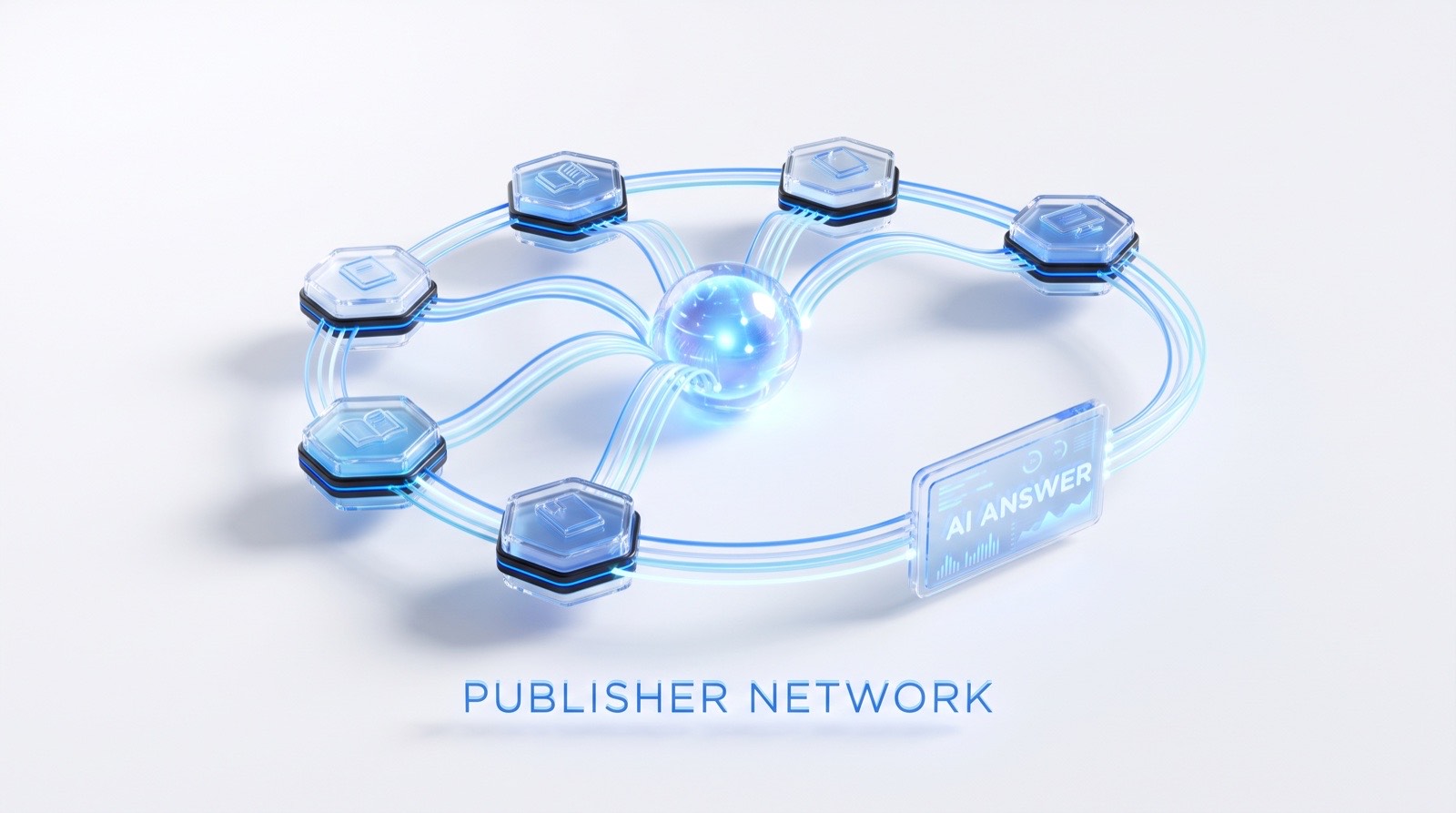
There's a wall most brands hit in AI search, and it's a frustrating one. You can audit your visibility, find the gaps, write perfect answer-first content, and publish it flawlessly - on your own site. But a large share of the citations AI engines trust most don't live on your site at all. They live on third-party sources: review platforms, comparison pages, industry publications, communities. You can influence those, slowly and indirectly, but you can't simply publish to them. That wall is where most GEO programs stall.
A publisher network is how you get over it. It's the missing link between "we know we need a credible off-site mention" and "it's published, live, in a source AI actually cites." This guide explains why the wall exists, what a publisher network does, and why it's what finally closes the loop from insight to real, off-site visibility.
Why your own site isn't enough
We've made this point across our guides because it's the one most teams underrate: AI weighs corroboration. A claim that appears only on your marketing site is the least trustworthy kind - of course you say good things about yourself. The same claim, echoed across independent, credible sources, is one an engine will repeat with confidence. (This is the citation supply chain and the Signal layer of Trust / Scale / Signal at work.)
The implication is uncomfortable: a meaningful part of your AI visibility is decided by content that isn't yours and isn't on your domain. You can do everything right on-site and still lose to a brand that's simply talked about more credibly across the web. The off-site half of GEO is real, and it's gated behind access you don't have by default.
The gap between "should publish off-site" and "did"
Knowing you need off-site presence doesn't produce it. The work between the insight and the result is real and usually unowned:
- Identifying the right sources - not just any site, but the ones your category's AI answers actually cite.
- Creating the right asset for each - framed and structured to be citable, not just published.
- Actually placing it - securing publication on credible third-party sources, which is slow, relationship-dependent, and outside most in-house teams' reach.
This is where GEO programs quietly die. The audit says "build off-site authority here." The team nods. And then nothing happens, because the path from that insight to a live placement runs through doors the team can't open. The loop stays open.
What a publisher network does
A publisher network closes that gap by providing the access and the path: a built-in set of credible publishing destinations, connected to your GEO workflow, so an identified off-site gap can become an actual published placement.
In practice, it turns the open loop into a closed one:
- Insight. Your monitoring and citation analysis surface an off-site gap - a question where your category's answers cite sources you're absent from.
- Brief. That gap becomes a finished, GEO-optimized content brief - what to write, for which engine, framed to be citable. (See from insight to execution.)
- Publish. Instead of stopping at "now go find somewhere to publish this," the asset goes live through the network - placed on a credible source where AI engines actually look.
- Re-measure. You track whether the placement moves the metric on the prompts it targeted, especially your Citation Rate.
The difference is the third step. Without it, GEO is a diagnosis with no treatment for the off-site half. With it, "you need a credible mention here" becomes "it's published, here's where."
Why this closes the loop
Most AI-visibility tooling closes the on-site loop at best - it can tell you to fix your own pages, and good tools help you generate those fixes. But the off-site loop, the one that often matters most for trust, stays open because publishing to third-party sources is a different kind of problem: it's about access and distribution, not analysis.
A publisher network is what closes that second loop. It's the reason "see it AND fix it" can extend past your own domain - because some of the fixing has to happen off your domain, and a network is how you reach it. For a brand, that means the off-site authority you could previously only hope for becomes something you can systematically build. For an agency, it means a service you can actually deliver and prove, not just recommend.
This is the part of GeoGenie that turns insight all the way into outcome: ContextGenie and PromptsGenie find the questions, MonitoringGenie and CitationsGenie find the gaps, ActionsGenie turns them into briefs, and the Publisher Network gets the off-site ones published where AI looks. Insight → brief → published → measured, on-site and off.
The first step is the same as always: see where your gaps are. Run a free AI visibility report for the on-site picture, and explore how the suite closes the off-site loop from there.
Frequently asked questions
Why can't I just publish off-site content myself?
You can earn some placements through outreach, but it's slow, relationship-dependent, and hard to do at the scale your gaps require. A publisher network provides built-in access to credible destinations, so an identified gap can become a placement without you sourcing every one by hand.
Isn't this just link building?
No. Link building chases links for ranking. A publisher network is about getting credible, citable content into the off-site sources AI engines actually pull from - the corroboration that builds citation trust, not a backlink count.
How is a published placement different from a mention I earn organically?
Both help. Organic mentions are valuable and authentic; a network adds a deliberate, repeatable path to credible placement so your off-site presence isn't left entirely to chance. The key is that placements are genuine, useful content on credible sources - not manufactured noise.
Does off-site publishing replace fixing my own site?
No - they're two halves of one loop. Your own pages still have to be reachable, structured, and citable when an engine follows a trail back to you. The network handles the off-site half; on-site work handles the rest.
How do I know an off-site placement worked?
Re-measure the prompts it targeted and watch your metrics, especially Citation Rate. Movement there is the signal that your off-site corroboration is strengthening your citation supply chain.
The hardest, most decisive part of AI visibility often isn't on your own site - it's the credible off-site sources AI trusts, which you can't simply publish to. That's the wall where most GEO programs stall. A publisher network is how you get over it: it turns "you need a mention here" into "it's published, here's where," and closes the loop from insight all the way to outcome - on-site and off.
See your on-site gaps first: run a free AI visibility report.